samedi 26 septembre 2015

mercredi 23 septembre 2015
Gaga’s Born Brave Bus sheds light on mental health issues teens face

Q13 FOX News reporters
TACOMA — Tacoma pop superstar Lady Gaga came to Tacoma. And she brought more than her music.
The singer is tackling the topic of bullying on her "Born This Way Ball" world tour that kicked off in Tacoma Monday night. Along with her music, a Born Brave Bus accompanying the tour featured an interactive display with games, arts and crafts intended to de-stigmatize mental health problems many young adults face.
The idea for this Born Brave Bus tour stems from Gaga's Born this Way Foundation, a nonprofit organization meant to foster an "accepting" society, representatives with Gaga said.
Young adults can use the tour, and the touring bus, as a way to learn more about local resources on anti-bullying, suicide prevention and mental health services in the area.
A ticket was required to see Lady Gaga perform but you didn't need one to benefit from her foundation.
"She has a really amazing message," said fan Elizabeth Rutledge.
The singer known for her unconventional style and lyrics is now reaching youngsters beyond her music.
Through her foundation, the pop singer provided a team of counselors and psychologists to speak with youngsters at her concert sites about emotional empowerment.
"We've had a couple of private conversations with the kids and gave them resources; I think it's going to make a difference," said school psychologist Hayley Thompson.
Rutledge, 15, is one of those teens who opened up about bullying in her school.
"It's a huge problem and it's not dealt with. I've experienced it at multiple schools," said Rutledge.
Rutledge says counselors lifted her spirits and helped identify her strengths. Parents who initially came along for the music left with a better understanding of their children.
"It's tough, it's a different world than when we were kids there are more pressures," said parent Patrick Rutledge.
Fans say Lady Gaga is more than music to them; she represents courage to be themselves.
"If you want change, change begins with you," Lady Gaga said in a brief statement to fans before the concert.
For those who got to hear that voice up close, the experience was surreal.
"I said I loved her and she said, 'Thank you so much.' She said I looked fabulous, which I don't, but I really appreciated it so much," said fan Clayton Knott.
The singer's foundation says 1 in 5 young people experiences a mental health issue their goal is to connect kids with local resources that will help them combat things like depression and bullying. The interactive event included lasted from 3 to 7 pm.
Susan Swearer, chair of the Born This Way Foundation's Research Advisory Board, said one-in-five young people experience some type of mental health issue during adolescence. Swearer hopes the bus helps reach kids struggling with mental health problems.
"Being Brave is recognizing your strengths," Swearer said. "It's about recognizing your limitations or things that you need to work on, knowing where to get help, helping others, bravery really encompasses not only your own self development, but being brave in terms of helping others who may need some support."
Omar Lopez drove hours from Eastern Washington to make it to the concert. He said Gaga's acceptance, and drive to help others, is part of what makes her a great pop star.
"That's why I'm a big fan of hers," Lopez said. "You're born this way. This is who you are. So why not be who you are?"
Organizations like the Trevor Project, Campus Pride and the National Association of School Psychologists are taking party in the event. For a list of where to find mental health services in Tacoma and the rest of the Puget Sound, head here.
samedi 19 septembre 2015
9 Telecom launches two business offers
9 Telecom, the subsidiary of LDcom in France, has introduced two new offers for businesses, 9COM UNIQUE and 9DSL Entreprise. The 9COM UNIQUE is fixed telephony offer that bills per second and costs EUR 16.50 per month for one connection and EUR 210 per month for up to 30 connections. 9DSL Entreprise costs EUR 35 per month for the 9DSL 512 service and EUR 60 per month for the 9DSL 1024 service. These service includes unlimited POP3 and Webmail e-mail addresses, 100 Mb home page space, a dynamic IP address and commercial and technical assistance by telephone on weekdays between 08.30 and 19.00 hours. Other services like a firewall, a spam filter and anti-virus software are available, but cost extra per month. Both offers are available in the following unbundled cities: Aix-en-Provence, Antibes, Biarritz-Anglet-Bayonne, Bordeaux, Caen, Cannes, Grenoble, Le Havre, Lille-Roubaix-Tourcoing, Lyon, Marseille, Nantes, Nice, Orleans, Paris, Reims, Rennes, Rouen, Sofia, Strasbourg, Toulouse, Tours. Amiens, Besancon, Dijon, Montpellier, Mulhouse, Toulon, Metz, Nancy will be unbundled before the end of the year.
Free Headlines in your E-mailEvery day we send out a free e-mail with the most important headlines of the last 24 hours.
vendredi 18 septembre 2015
SP3H Announces a €2.5 Million Round of Financing with Truffle Capital
PARIS & AIX-EN-PROVENCE, France--(BUSINESS WIRE)--SP3H (a leading company in the field of fuel profiling [1]), today announced that it had raised €2.5 million. This round of financing was initiated by Truffle Capital, SP3H's longstanding institutional investor. SP3H also announced the consolidation of its Board of Directors, with the arrival of Peter Ward, Michel Eschalier and Jérôme Gallot.
The funds raised will be used to (i) finance the initial tests of a vehicle-embedded industrial sensor, (ii) initiate the marketing of the first systems for garages and car dealers and (iii) structure strategic industrial alliances (particularly in refining, petrochemicals and aeronautics sectors).
SP3H has developed miniaturized optical sensors for fluid analysis (including on-board fluids, such as fuel), which may have particular value in view of the coming EURO VI and EURO VI.2 standards. This type of technology can reduce internal combustion engines' CO2 emissions and fuel consumption while improving reliability.
Peter Ward (aged 69) has spent much of his international career leading international companies in the automotive and engineering sectors (notably Rolls-Royce Bentley, Jardines Motors, and Raymarine) in London, Hong Kong and New York. For ten years, he devoted himself to the development of clean-tech start-ups in the wind power industry and in sectors covering automobile assembly, instrumentation and electric motors. He was appointed as non-executive Chairman of the SP3H board on March 4, 2014.
First as an engineer and then as an executive, Michel Eschalier (aged 68) has primarily worked in the diesel engine industry in France and worldwide (Perkins, Lucas Varity, and Delphi Europe). He currently teaches management at the training institute run by IFP Energies Nouvelles (formerly the French Petroleum Institute) and acts as a business angel through the Réseau Entreprendre association.
As a lawyer and a graduate of the Institut d'études politiques and the Ecole Nationale d'Administration, Jérôme Gallot (aged 55) has worked for 25 years as a senior manager in industry, international trade, and corporate finance (at CDC Entreprises and Fonds Stratégique d'Investissement). Between 2011 and 2013, he was CEO of Veolia Transdev. Jérôme Gallot works as a consultant in corporate governance, competition law and management, and is a board member with several companies.
Key figures: rounds of financing carried out by SP3H since its incorporation:
About SP3H:For more information, visit www.sp3h.fr
[1] identification of a fuel's molecular structure
WIELS Names New Senior Curator
Zoë Gray has been appointed new senior curator at WIELS, the contemporary art center in Brussels. Born 1978 in the UK, Gray currently lives in Brussels, and her recent independent curatorial projects include "PLAY TIME," at les Ateliers de Rennes, the contemporary art biennale, Rennes, 2015; and "Wilfrid Almendra: Matériologique," staged at Fondation d'entreprise Ricard, Paris 2013.
Gray was a curator at Witte de With center for contemporary art Rotterdam from 2006 to 2012. She was also a project manager for the LUMA Foundation in Arles. Currently, she is editing the first monograph of Hedwig Houben.
September 18, 2015Noelle Bodick reports at Artinfo that David Findlay Jr., an art dealer who owned an eponymously named gallery on 57th Street in Manhattan and comes from a family of gallerists, died last Monday.
The first of the Findlays' art galleries was founded in Kansas City, Missouri in 1870. David. B. Findlay, Findlay Jr.'s father, opened a gallery in New York in 1936 while his brother established another in Chicago. After working in his father's gallery for ten years, Findlay Jr. started his own in 1982 and moved the business to its current space in 2000. His specialty was nineteenth and twentieth century American art. Findlay Jr.'s brother, Peter Findlay, also operates a gallery in Manhattan focusing on Impressionism. David Findlay Jr.'s gallery will continue under the supervision of Louis Newman and Lee Potter Findlay, Findlay Jr.'s daughter. The gallery represents artists such as Betty Parsons, Jack Wright, Vance Kirkland, and Leonard Edmondson.
September 18, 2015After electing five new trustees last March, the Smithsonian's Hirshhorn Museum and Sculpture Garden has announced the addition of four more trustees to the Museum's board this week. David Appel, Marcus Brauchli, Theaster Gates, and Sheri Schlesinger are the new members, bringing the total membership of the board to twenty-one. Theaster Gates will replace Ann Hamilton as the artist representative on the board.
David Appel is president of Toronto-based firm David Appel Investment Consultants and serves on the boards of the Shaw Festival, the National Theater School of Canada, and the Toronto Foundation for Student Success. He is a member of the twentieth century acquisition committee at the Montreal Museum of Fine Arts and has served on the boards of Canadian Stage, the Desrosiers Dance Theater, and the National Ballet of Canada.
Marcus Brauchli is cofounder and managing partner of North Base Media, which invests in journalism-related media and technology companies, and was previously a vice president of the Washington Post Co. and executive editor of The Washington Post. He is chairman of the Arthur F. Burns Fellowship, an exchange program between the U.S. and Germany, and is also is a member of the Council on Foreign Relations, the Economic Club of New York, and the World Economic Forum's global agenda council on the future of media, entertainment and information.
Theaster Gates is Chicago-based artist who founded the nonprofit Rebuild Foundation and is currently a professor in visual arts and director of the arts and public life initiative at the University of Chicago. Gates has exhibited and performed at the Studio Museum in Harlem, the 2010 Whitney Biennial, the Whitechapel Gallery in London, Punta della Dogana in Venice, and the Museum of Contemporary Art Chicago, among others.
Sheri Schlesinger is a Los Angeles-based philanthropist who was owner and chief executive officer of Schlesinger & Associates, an interior design and architecture firm. She was the national lay chair of the One Family Fund and is retired board chair of Aleinu.
September 18, 2015After the Honolulu Museum of Art issued a lawsuit last month to collector Joel Alexander Greene for failing to provide the provenance of five works he had donated to their collection, Greene has now decided to countersue the museum, reports Hannah Ghorashi at Artnews. Greene is suing for breach of contract and damages, claiming his name has been unfairly tarnished and that in his previous dealings with the museum there had been "no question as to the title of the pieces." The breach of contract he claims can be located in the fact that the museum cancelled his charitable gift annuity, an agreement he had with the museum since 2004.
September 18, 2015The Italian curator Lorenzo Benedetti, who has served as director and curator at Amsterdam's De Appel for just fifteen months, has been abruptly fired by the center's board according to Lorena Muñoz-Alonso at Artnet. De Appel's CEO Alexandra van Huffelen told the Dutch newspaper De Volkskrant that regarding the institution's decision "[Benedetti's] exhibition program was good, but De Appel has missed a leader in other respects: someone who inspires internally and externally and conveys a vision of the future." In a more defensive tone, she also added: "to outsiders it might seem like a fast action to put Benedetti out of commission right now, but behind the scenes there have been problems for the past six months."
Benedetti's programming was embraced by the Dutch art community for his exhibitions of artists such as Melanie Gilligan, Michael Dean, and Michael E. Smith.
September 18, 2015Hannah McGivern reports in the Art Newspaper that the shortlist of nominees for the seventh edition of Artes Mundi, the UK's largest prize for contemporary art, has been announced. The seven artists in the running for the biannual award, worth about $62,5640, are John Akomfrah (UK), Neïl Beloufa (France/Algeria), Amy Franceschini of the Futurefarmers collective (USA/Belgium), Lamia Joreige (Lebanon), Nástio Mosquito (Angola), Hito Steyerl (Germany/Japan) and Bedwyr Williams (UK).
Artes Mundi was created in 2002 to celebrate international art that engages with "the human condition, social reality and lived experience." The shortlist was chosen from more than 700 nominations across ninety countries and an exhibition of works by the seven artists is set to open next October at the National Museum Cardiff and Chapter gallery in Cardiff, Wales. The winner will be announced in January 2017.
September 18, 2015The Institute of Contemporary Art, Miami has appointed Ellen Salpeter as its new director. Salpeter is currently the deputy director of external affairs at the Jewish Museum in New York, where she manages the museum's strategic planning. Prior to that she was the founding director of Heart of Brooklyn, a non-profit consortium of cultural organizations, and was also from 1994 to 2001 the executive director of Thread Waxing Space, a multidisciplinary arts and education space supporting emerging artists. Salpeter begins her new role at ICA Miami on December 1.
September 17, 2015
Maurice Tuchman, A Report on the Art and Technology Program of the Los Angeles County Museum of Art, 1971
The Getty Research Institute is acquiring the archive of curator Maurice Tuchman. The first full-time curator of modern art at the Los Angeles County Museum of Art, Tuchman served from 1964 to 1994. During his tenure he founded the museum's Art and Technology program, which promoted collaborations between artists and the corporate tech world. He also curated shows including "New York School: the First Generation," 1965, and "Edward Kienholz," 1966.
The archive covers thirty years of exhibitions and projects at LACMA and include letters, press clippings, photography, audiovisual recordings, publications, personal papers and even Tuchman's appointment books from the beginning of his tenure at LACMA until the 1980s. Edward Kienholz, Claes Oldenburg, and Jasper Johns are among the artists who figure in the documents. Rare artist publications such as Ilya Kabakov's Red Wagon and the 1970s New York artists' magazine Avalanche are also included in the archive.
Said Thomas W. Gaehtgens, director of the Getty Research Institute. "Maurice Tuchman is a standout figure in the recent history of modern art in Los Angeles and beyond and his influence is unquestionably evident to this day."
September 17, 2015
View of LaMont Hamilton's "Omaha Projects" at Carver Bank, 2013
Artadia has revealed the winners of the 2015 Chicago Artadia awards. LaMont Hamilton and Cauleen Smith will each receive twelve thousand dollars, while Laura Davis and Irena Haiduk will each win five thousand dollars. Chosen from an applicant pool of 450 Chicago-based artists, the winners will also have access to Artadia's New York residency.
Artadia currently funds Awards on a rotating cycle in New York, Houston, Chicago, San Francisco, Atlanta, Boston, and Los Angeles.
September 17, 2015An email missive by financier Ronald O. Perelman—who recently became chairman of the hall's board of trustees at Carnegie Hall—has been sent to other board members accusing the venue's executive director of improprieties.
According to Gregory Zuckerman and Jennifer Smith for the Wall Street Journal, Perelman's letter, which expresses concern over "related-party transactions," also brings up "a troubling lack of transparency and openness in the way Clive Gillinson was interacting with me and the board."
"My concerns initially arose because of an inability to obtain a full picture of Carnegie Hall's financial operations, especially as it related to profits and losses involving performances," Perelman wrote. "I was told that such financial information was never shared with the board or even the chairman."
Perelman continued by saying that this policy fell short of criteria of the New York State Nonprofit Revitalization Act, which mandates that board members take an active oversight role over staff action.
The letter "serves notice that he may be prepared to bring the bare-knuckle tactics of a corporate raider into the genteel precinct of one of America's most august cultural institutions. Such disputes generally are handled discreetly and kept out of public view, much as they usually are at orchestras, museums and other art organizations," write Zuckerman and Smith, who also note that Perelman's history of litigating includes suits brought against investment bank Morgan Stanley and art dealer Larry Gagosian.
Clive Gillinson, who is Carnegie Hall's executive and artistic director, has said "In serving Carnegie Hall for ten years, I am very proud of everything we have achieved together. I love the hall and everything it stands for, and will continue to give it my all."
Another member of the board, pianist Emanuel Ax, said the letter was the first time he'd heard about troubles with Gillinson. "My contact with Clive has always been fantastic," he said. "He's a great guy. As far as I could tell, he was running everything wonderfully."
Examining innovation in the Alps at the local scale
1The Pays des Ecrins was selected to host the 2008 Alpine Week because it seemed an appropriate location to illustrate the beginnings of a response to the questions raised by innovation in mountain areas. The argument put forward by the organisers on this occasion underlined the creative capacities that have accompanied the profound changes that have affected this region over the past twenty years. The regeneration of Argentière-la-Bessée, the canton's main town and administrative centre, following the brutal decline of industry in the second half of the 1980s, appears as a key factor in this development, particularly as it took place in a context of change in the local geo-touristic system. Strong local dynamics, combining cultural and socio-economic creativity, institutional agility or inventiveness, the affirmation of a "project territory", and the emergence of political leadership and media visibility were a few of the tangible signs of a change and a movement that might be interpreted in terms of innovation: firstly in the general sense of introducing novelty, then, to a certain extent, in the more limited sense of a diffusion process of a novelty in terms of practices and spatial distribution. Starting from the hypothesis of a strong value that is illustrative of this mountain area, we examine the factors and conditions governing an ordinary innovation (Alter, 2000) at the local scale. Following a review of the main changes affecting the Pays des Ecrins over the past 25 years, we will briefly examine how this area can be represented as a creative outsider within the French Alps, before outlining and discussing several possible interpretations of its capacity for innovation1.
2The Pays des Ecrins corresponds to both the canton of Argentière-la-Bessée and the Community of communes of the Argentiérois, comprising nine communes2 situated to the south of Briançon, in the French Hautes-Alpes department. From a geo-economic point of view, the Pays des Ecrins was marked in the 20th century by the development of a double polarity: large-scale industrial plants and small-scale traditional activities in the Durance valley, agriculture and tourism in the adjacent valleys of Vallouise and Fressinières.
3The industrial decline and reconversion of Argentière-la-Bessée, the market town of the Pays des Ecrins, has already been the subject of detailed study (Cowburn and Sciblo-Jaillet, 1995; Donert and Light D., 1996) and will therefore not be dealt with any further here. Let us simply note that final closure of the Pechiney aluminium plant in 1986, which had been the economic and urban heart of the region, led to a deep economic, demographic, social and political crisis as well as one of local identity: direct loss of 334 jobs, decline of 15 % in the population of the commune3, and even a deconstruction of the municipal council since a large proportion of the elected representatives were managers at the plant.
4This "end of the world" situation was exacerbated by the virtual complete failure, in less than three years, of the 70 million franc industrial reconversion plan financed by Péchiney with the support of the public authorities. Indeed, it was this bitter failure and increasing doubts about the industrial vocation of the commune that made a redevelopment project to promote tourism and heritage activities all the more credible. Previously, such activities had only been mentioned in a very hypothetical manner, giving rise to disbelief and distrust by many of the local population as well as local actors and observers. From then on, thanks to strong leadership through from a new and younger municipal council, together with the dynamism of an emerging group of new local economic operators (guides, hoteliers and innkeepers, shopkeepers, publishers…), Argentière-la-Bessée deliberately refocussed its activities on its mountain environment. This approach, em bodied in the formula "history, nature, sport", was based on a consultant's report commissioned in 1990 and was aimed at making Argentière "the gateway to the high mountains" by systematically taking the opposite course to that of a century of virtual industrial monoactivity and isolation with respect to the nearby mountains. Within the framework of a pluriannual tourism development plan launched at the beginning of the 1990s, the refocusing of Argentière on the mountains was thus largely based on developing the potential of the rich and unexploited natural and cultural resources offered by the Durance valley (gorges, running water), the Fournel valley (rocks, ice, canyons, mining and floral heritage) and the proximity of popular tourist meccas in the Vallouise valley.
5In one decade (1990-2000), this deliberate refocusing took on numerous forms in the area of facility planning and development, but also from a socio-economic and geocultural point of view (see insert below).
Main indicators of the redevelopment of Argentière-la-Bessée (1989-2009)

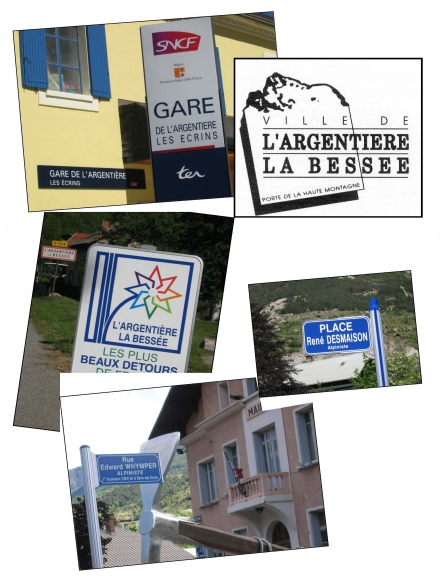
Photographs: Ph. Bourdeau 2007
6Against a backdrop of increasingly diverse mountain sports activities, particularly in the summer, the growth of sports tourism in Argentière-la-Bessée during the 1980-90 period contributed to a profound change in the local geotouristic system. Thus, as in most of the mountain massifs, the Pays des Ecrins was marked by the development of recreational activities that were peripheral to the high mountain areas. The development of climbing sites, paragliding, via ferrata, adventure parks in forest areas, canyoning itineraries, and white-water courses enabled a recentering of activities that benefited the valley bottoms and the villages and areas around the resort of Puy-Saint-Vincent. In some cases, as with river-based sports or mountain biking, this development could be explained by hydrographical and topographic factors. But such developments and the sports activities underpinning them were also related to new ways of looking at recreational time-space, i ts social nature and its styles (interest in sites that until then had been neglected, interest in practicing activities over shorter time periods, requiring shorter access times, multi-activities, more family-oriented activities, and those more focused on body movements than on the environment) while at the same time respecting the restrictions imposed by the regulations of the Ecrins National Park4. This tourism offer, which was both complementary and alternative to those based on traditional reasons for visiting the mountains, gradually became a decisive component of local tourism. With the help of the concerted efforts to develop tourism in Argentière-la-Bessée, it contributed to a more balanced spatial development of local tourism in favour of the downstream areas.
7An inventory of the most significant creations over the past twenty years in the Pays des Ecrins provides us with a list of operations or events of variable scale that bears witness to the region's distinct capacity for launching or welcoming experimentation:
Creation of the concept of a via ferrata for sports enthusiasts with the introduction of the first French itinerary by the guide Lionel Condemine at Freissinières (1989), followed by the creation of a second itinerary at Les Vigneaux (1992);
Signature of the first Natura 2000 convention between the State and a local authority (valley of Fournel-Les Bans, Argentière-la-Bessée, 2002);
Preliminary study of the first Local Agenda 21 focused on sports tourism with scientific backing from the Institut de Géographie Alpine (Argentière-la-Bessée, 2005-2006);
Carrying out of first voluntary SCOT (schéma de cohérence territoriale) project in France and setting up of a sustainable development plan (Pays des Ecrins, 2004-2006);
Obtaining of "centre of rural excellence" quality label on the theme of a "Region of water": development through rehabilitation, awareness programmes and the setting up of a water network with all the everyday, industrial, heritage and recreational uses of water (Pays des Ecrins, 2006);
Implementation of an experimental environmental analysis in the resort of Pelvoux-Vallouise (Interreg Dynalp2 programme, 2007-2008, Pays des Ecrins);
Second French commune to join the "Alliance dans les Alpes" (Argentière-la-Bessée, 2006), followed later by the collective membership of the Pays des Ecrins;
Firstestimated carbon balance in the context of the candidature of Pelvoux-Ecrins to be the French candidate – on the theme of "back to beginnings" – for the Winter Olympic Games of 2018 (2009)5.
8Apart from a reference to the notion of sustainable development, the creativity observed in the region has been accompanied by substantial reflection not only on the question of observing change, but also on the understanding of the meaning of action and on the best way to make use of experience acquired: conference on "Natura 2000 and local authorities" (2002), Dynalp2 seminar "ski resorts: environmental assessment and diversification" (2007), meetings on transalpine routes (2008), Alpine Week (2008), support provided for numerous French and foreign university studies, commissioning of numerous audits and assessments in numerous fields: economy, environment, tourism, sport, heritage. This list can be further extended by adding all the analyses, consultancy studies and participative approaches conducted between 2005 and 2006 within the framework of the SCOT6 project tha t helped orient the Pays des Ecrins towards the model of a "learning territory" (Jambes, 2003). Similarly, the development sought encouraged openness, exchange and partnership with entities outside the territory: membership of Alliance dans les Alpes network, relations with other alpine regions within the framework of cross-border cooperative arrangements and Interreg projects, participation in the Via Alpina project, reception/welcoming of international youth workshops or researchers and groups of French and foreign students. (See in Annexe the document "Via ferrata" about the diffusion of via ferrata itineraries in France from the Pays des Ecrins produced by Pascal Mao and Nicolas Robinet, Cermosem UJF).
An analysis in terms of the region's geo-historical and cultural background9Although constructing an appropriate historical framework is beyond the scope of this study, it may nevertheless be observed that the pre-modern period of the Pays des Ecrins was marked by at least two events with a strong impact on local collective memory: the Vaudoise heresy, between the 13th and 16th centuries (Audisio, 1998), and the political autonomy of the Escartons (14th to 18th centuries). The influence of these events on local identity must be taken into consideration, particularly from the point of view of a certain resistance to what is the norm, institutional originality, cultural wealth and a tradition of openness to the outside – Switzerland and Italy for the Vaudois, Italy for the Escartons. The first English mountaineers who visited the valleys of the Pays des Ecrins in the 19th century were guided by the memory of the Vaudois and the persecutions they suffered.
10This context of dissidence and originality later reappears in other experiences such as the creation of a pioneer training course for teachers in Dormillouse, in the Fressinières valley, by the Pastor Félix Neff between 1826 and 1828 (Siestrunk, 2003) and, a century later, the arrival of libertarian communist teacher, Célestin Freinet, who during his house arrest in Vallouise from 1941 to 1944 wrote four works that laid the foundations of his alternative pedagogy, before creating pioneer "snow" classes there at the beginning of the 1960s (Lafon-Bottaro, 1999). In the 1970s, it was a community experience influenced by Lanza del Vasto that brought life to the hamlet of Dormillouse, at the same time that the entire Briançonnais area was witnessing the influx of a population of "neo rurals" and was within the sphere of influence of the cooperative of anarchist origin, Longo Mai. Then in the 1990-2000 period, the Pays des Ecrins saw the arrival of professionals in the tourism trade with ecotourism activities, as well as a significant development of market gardening and "bio" produce.
An analysis in terms of peripheral innovation11The theoretical and empirical contributions of studies of atypical forms of innovation underline the fact that beyond the numerous constraints on the mobilisation of resources, a bordering, peripheral or marginal position benefits from an attenuation of the factors of coherence that define the legitimate forms of action in a territory (Antheaume and Giraut, 2005). This "disengagement" from the norms may prove to be very creative in that it stimulates the capacity of the actors concerned to find cultural, economic, institutional, or identity arrangements, to negotiate dispensations or to undertake experiments to find alternative solutions. This brings us back to the analysis that presents innovation as a form of deviance from the "everyday" by individuals and groups who are often atypical and even dissident, who contravene rules to reach objectives that are not legitimate and may in this way contribute to a reversal of the norms (Alter, 2000).
12The stimulating effects and non-conformist creativity linked to this process may be found in the term outsider – with the double meaning of a maverick and a challenger – which very often defines the status of the Pays des Ecrins with respect to different projects and events: creation of a national mountaineering centre of the Federation of French alpine clubs in Pelvoux (2006), organisation of the Alpine Week (2008), candidature for the Winter Olympic Games (2009).
An analysis in terms of "creative crisis"13The de-industrialization of Argentière-la-Bessée at the end of the 1980s was reflected in a profound destabilisation of the economic, demographic, social and political system as well as the shock to local, and to a certain extent, cantonal identity. The plan adopted to confront the crisis corresponds perfectly to the decisional type of model adopted for tourism development in the Alps (Bozonnet, Guérin et Herbin, 1986). Tourism is thus mobilised as a consensual area of intervention for local authorities in that is based on an ideology of progress, is likely to produce extensive spin-off effects on different sectors of the economy and jobs while at the same time helping strengthen local identity.
14Following this line of reasoning, the direct and indirect effects of a crisis provide room to manoeuvre for a regeneration and requalification of the region. In Argentière, this process was mainly reflected in the increased availability of land and real estate property. Pechiney company housing was thus bought by the commune for a symbolic franc and then resold at a reasonable price to buyers originating from the Brianconnais region. The demographic impact was considerable and was reflected first of all in an increase in population, with the number of inhabitants (2375) in the commune in 2008 climbing back to almost 1982 levels. The change, however, was also reflected in a clear socio-demographic renewal during the 1990-1999 period, with a very strong growth in middle-class professions (+ 47, 1 %) and the managerial and upper intellectual professions (+ 25 %)7. In addition to its impact on house prices and demographic trends, this new population also provided overwhelming support for the commune redevelopment project by helping to reinforce it.
15The area's resilience was also reflected in terms of resources: the need to adapt and create imposed by the crisis gave rise to a re-examination of the potential of space that manifested itself not only in a redeployment of space within an enlarged "useful space" (valley of the Fournel river, old silver mines, Durance gorges, Rocher des Hermes…) but also by a transposition and reorganisation of cultural and physical resources. Although these resources did not change, they were "remobilised" within a context of new uses: the rock changed its status from that of a mineral to one of support for climbers, while water changed from an electrical power resource to one supporting ice climbing or canoe kayaking.
An analysis in terms of creative "entre-deux"16The rhetorical figure of "entre-deux" (between two) developed by Daniel Sibony provides a basis for rethinking the functions of secant links within which new paths and passages develop between the two terms that make up a relationship (Sibony, 1991). This perspective corresponds well to the notion of betweenness proposed by Nicholas Entrikin (Entrikin, 1991). Little referred to by French geographers, the "entre-deux" concept indeed appears as a particularly creative means for exploring and translating the many socio-spatial and socio-territorial relational schemas which are characterised by dualities, ambiguities or hybridizations where differences are played out again and frontiers become blurred in a way that is characteristic of territorial post-modernity: touristic/non-touristic place, town/mountain, resort/outside of resort, sport/heritage, holiday stay/residence, summer/winter, protection/development (Bourdeau, 2007).
17From this perspective, the Pays des Ecrins seems very illustrative of a certain number of emerging figures, of transitional and temporary situations that throw light on the reorganisation and creativity at work at different geographical scales and on different registers: "between lavender and glaciers"8, Northern Alps and Southern Alps, Briançonnais-Embrunais regions, Durance and tributary valleys, upstream and downstream, resort and villages, industry and tourism. By integrating sports activities into the heart of the town (climbing competition on artificial blocks) or in its immediate periphery (climbing, via ferrata, white water), as in marking out a heritage route through the heart of past and present industrial installations, it is once again "betweenness" that is being reinforced.

Photograph: Ph. Bourdeau 2007
18The path followed by the Pays des Ecrins over the past twenty years provides useful insights into the conditions under which a mountain area faced with the uncertainty of change and a major crisis can mobilise its historical, heritage, cultural, social and political resources to reconstruct an identity and a vision of the future that is both shared within the area and recognised outside it. This case study suggests that although innovation is clearly part of a context of change, it is also based on continuity, and sometimes on that which is permanent, which mobilises the constitutive elements of a territory over a long period. Taking into account the socio-historical and cultural background – even if forgotten or neglected by local memory – is therefore important since it is a significant element in analysing the capacity of a territory to produce, diffuse or integrate forms of creativity that can interpreted in terms of innovation.
19In the fairly impressive list of examples of creativity from the Pays des Ecrins region, how then do you distinguish between what is the product of innovation – in the canonical sense of novelty validated by a wide diffusion – and a simple invention? If we adopt this limited definition, only the invention of the concept of via ferrata for sports purposes seems to result from a convincing innovation process. Although the impact of this creation is far from negligible in terms of the number of visitors to the Pays des Ecrins or its image, simply considering it as an innovation only partially takes into account the local dynamics that finds expression more in terms of experimentation and appropriation of original and inventive solutions, based on a substantial array of formulas and local, national and European measures: Natura 2000, Interreg, Agenda 21, SCOT, centre of rural excellence, carbon balance, etc. In this regard, the contribution of the Pays de s Ecrins to an innovative process seems not only to rest on its capacity to diffuse novelties (via ferrata…) but also to import and implement pioneering devices and practices, an observation that appears to be characteristic of the innovative milieus studied by territorial economics (Maillat et al. 1993).
20The remarkable path of Argentière-la-Bessée, in terms of its identity as well as its activities, may be seen as a key element in the changes observed in the Pays des Ecrins over the past twenty years: from "l'Argentière-la-noire" (industrial pollution of the 1970s) to "l'Argentière-la-Bessée" (deindustrialization of the 1980s) and "l'Argentière, porte de la haute montagne" (Argentière, gateway to the high mountains), the slogan adopted in 1994, a territorial rethinking and recomposition has taken place without any modifications to the limits of the commune or canton. But the stimulus and sometimes the motor provided by the town has been only one of the elements active in a process in which each specific entity of the Pays des Ecrins has participated: Fressinières, Puy-Saint-Vincent, Vallouise-Pelvoux, communes of la Durance – La Roche-de-Rame and Saint-Martin-de-Queyrières. From an initial distinct fragmentation between the Durance and the secondary valleys, downstream and upstream, industry and tourism, and town and village, a gradual reorganisation has occurred resulting in a more balanced system of links, functions and identity and a new socio-spatial organisation in terms of everyday life, residential practices, economic activity and territorial identity.
21Thus, looking at the Pays des Ecrins region as a whole over the period of time considered, a quadruple transition appears to have taken place:
– From a reactive strategy, caused by the industrial crisis of Argentière-la-Bessée, to a proactive strategy that manifests itself, for example, in the voluntary SCOT project or the candidature for the Winter Olympic Games of 2018;
– From one-off projects commissioned by the commune (Argentière) to intercommunal projects commissioned by the Community of communes that promotes shared actions at the scale of the territory as a whole;
– From experimental procedures implemented on an adhoc and trial basis (a project, a creation, an event…), often by individuals with the profile of entrepreneur /developer, to organised systematic procedures, programmed and professionalized within the framework of the regional authorities (Centre of scientific, technical and industrial culture, Community of communes, Tourism Bureau of Pays des Ecrins…) ;
– From an endocentric creative procedure, with development focused on boosting the local economy and identity, to an exocentric procedure with the focus more on the competitive positioning of the region in relation to the exterior (other tourist destinations, other towns that are candidates for the Olympic Games).
22Through its capacity to produce and to accept an ordinary innovation and to implement it in a project, the Pays des Ecrins appears to be a suitable mountain region, among others, for observing a comprehensive change that takes the form of a socio-economic transfer from industry towards cultural and service activities (heritage, tourism, training, public buildings and works sector), a reorganisation of the scales of operation (from commune to community of communes), as well as a redefinition of the respective status of market towns, resorts, valleys and their relations. In the end, the innovation issue hardly seems to be a question of the creation or emblematic one-off operation of an experimental hit parade of ideas, albeit substantial, whether it concerns unexpected successes – via ferrata – or projects that have not yet produced results, such as local Agenda 21 themes or SCOT projects. It seems to be more part of the slow appropriation, transpositio n and territorial "translation" of a process of change that is gradually negotiated, shared and worked on within a framework of project intercommunality, in which the market town gradually rediscovers its place thanks to multiple creative initiatives, by taking on not only political leadership but also a wide array of public and private professional skills. In this respect, the collective work carried out in preparing the candidature of the Pays des Ecrins for the Winter Olympics of 2018, beyond its trivial appearance or its media dimension, seems to cross a new threshold not only in the preparation and structuring of territorial intelligence but also in the registration of the territory in a common time frame – albeit far off and hypothetical – by going beyond the dyschronies (Alter, 2000) of the present. In this respect, it seems to confirm that if "the present divides, the past and the future unite" (Calame, 1993). Finally, it should not be forgotten that the challeng es of communication and territorial marketing give rise to an excess of innovation rhetoric, even though its most convincing and most interesting forms from the point of view of sustainable development do not always claim to be innovations. The many experiments and experiences reported in the third Report on the state of the Alps (CIPRA, 2008) bear witness to this in eloquent fashion.
Le Grand voyage
Genre: Drama | Running Time: 108 min.Release date: April 8, 2005
Current rating: 
Cast: Nicolas Cazale, Mohammed Majd, Jacky Nercessian, Ghina Ognianova, Kamel Belghasi, Atik Mohammed
The youngest son of a family of Moroccan immigrants who've settled in Aix-en-Provence, France, Reda tries to avoid all contact with his authoritarian father, a devout Muslim. However, one day he finds himself obliged to drive his father to Saudi Arabia to visit Mecca.
During the trip, the two lock horns as the father refuses to speak French with him, and throws Reda's cell phone out of the car as he's speaking to his French girlfriend.
Director: Ismaël FerroukhiStudio: Ex-CentrisProducer(s): Humbert BalsanScreenplay: Ismaël Ferroukhi
Tourism : the new LSO International
French leader for the organization of events and professional travels, Lenny Spangberg's group quickens the pace. He reinforces its management and extends its market.
It is one of the best success of the French Riviera in the business tourism sector. In more than ten years, Lenny Spangberg has followed the rise in power of congresses and business tourism on the French Riviera, between Cannes, Nice and Monaco. From now on, he is the French leader in the organization of events and professional travels and he aims to quicken the pace. Thus, in his development project in France and on an international scale, Lenny Spangberg, President of the LSO International group appointed managers in order to strengthen its management team.
Rémy Crégut, executive vice president
- Rémy Crégut joined the LSO International group as executive vice-president in charge of marketing and commercial development. It is one of the key nominations. He will be in charge of the management of regional offices of Lyon and Paris at the same time. Rémy Crégut worked most of the time of his career in the marketing and sales function within the internat ional hotel chains (Accor, Hyatt, Intercontinental). More recently, he managed the company business and events tourism within Disneyland Paris and contributed to the opening of the Grimaldi Forum Monaco as Marketing and Sales Manager. He is also President of the French section of the Meeting Professional International association and elected member at the office of the French Club of Hospitality Business Tourism within the "Maison de la France".
- Michaël Freeland, previously USA-Australia Sales Manager, was appointed Marketing and Sales Vice-President for North America and Asia-Pacific- Stéphane Teboul, who was until now purchasing and development manager is now promoted Corporate Vice-President.- Marie-Pierre Pironon, Marketing Manager, becomes Executive Manager of LSO International.- Renaud Bachoffner, was appointed Sales Manager for Europe.- Laetitia Désérable was appointed Manager of LSO French Riviera.
All the jobs in business tourism
French leader in the organization of events and professional travels on the national territory for foreign companies, the company set up last summer in Sophia Antipolis at the "village d'entreprises" of Green Side. However, they kept offices in Cannes, Nice, Aix-en-Provence, Biarritz, Lyon, Paris, and in the principality of Monaco. Funded in 1987 by Lenny Spangberg, the LSO International Group has faced for three or four years a new rise, with the high revival of tourism. This year, with its 96 employees, LSO has then the aim to reach a turnover of 250 million francs, with a gross profit of 62 millions.
With the development of its exports departments and the opening of its regional and international offices, the group has also created these last years a complete range of related and complementary activities covering the overall business and events tourism jobs. That is to say:
. A department for Management Accomodation and Registration of partipants at congresses, managing more th an 200,000 bednights for about 50,000 participants at congresses each year..A department for Exhibitions and space management.A department for New Technologies of Information and Communication, specialised in the creation and the management of Internet websites related to the events..A Production company in charge of conceptualising, staging and creating exceptional events (more than 250 for the year 2000).
Development on French and European markets
Thanks to these teams, the LSO International group can answer most of the needs of companies for incentive trips, measures for the development of customer loyalty or promoting, launching of products, sale agreements, professional meetings, congresses and exhibitions. It is a savoir-faire which allows Lenny Spangberg to plan a new expansion nowadays.
Until now, it was focused on the markets of North America, Britain and Germany, but from now on, the group plans to develop the French market as well as the Northern Europe market (Scandinavia and Benelux) and Southern Europe (Italia and Spain). It will particularly focus on European head offices of large multinational companies. The new LSO International is now launched…
Thierry STOLL appointed Deputy Director General in DG Internal Market
IP/02/1754
Brussels, 27 November 2002
Thierry STOLL appointed Deputy Director General in DG Internal Market
The Commission has today decided to appoint Mr. Thierry Stoll, a Commission official from Luxembourg, as Deputy Director General in the Internal Market DG. He will be responsible for the DG's complaints and infringements policy, relations with the European Parliament, as well as two directorates covering public procurement, the free movement of goods, postal services and regulated professions.
Mr. Stoll holds a degree in international and community law from Aix-en-Provence. He originally joined the European Commission in 1981 from the Foreign Affairs Ministry in Luxembourg as a member of the Cabinet of Commission President Gaston Thorn. From 1987 until 1991, Mr. Stoll worked as Luxembourg's deputy Permanent Representative to the European Communities in Brussels, and then from 1991 to 1993 as Luxembourg's Ambassador to Belgium and Permanent Representative to NATO. Since 1993, Mr. Stoll has worked as Director in the Directorate General for Internal Market, where his main responsibilities have most recently been electronic commerce, intellectual and industrial property and the media.
CV attached.
Curriculum vitae
Thierry Stoll
né le 10 mars 1953 à Luxembourg
marié
Julien Ruggeri

As of 8:36 AM 09/18/15 All times are local (Market data is delayed by at least 15 minutes).
Executive Profile* Age Total Calculated Compensation This person is connected to 26 board members in 2 different organizations across 4 different industries. 41 -- Background*Mr. Julien Ruggieri serves as Director of Finance at Batipart Group. Before joining Batipart, Mr. Ruggieri worked at Morgan Stanley Real Estate Funds (MSREF) in New York, after having worked for an American subsidiary of Arcelor Group. He serves as Chairman of the Board at Cherbourg Hotels and Monroe SA. He also serves as Vice Chairman at Jardiland SA. He serves as a Member of Board of Directors at IMMEO Wohnen GmbH, GFR IMMOBILIEN GmbH, and ANTHEMIS (SAS). He serves ... as a Director at Parcs GFR SA, Groupe Promeo SA, Maelys SA and Cotinvest SA. He served as a Member of Supervisory Board at Korian SA. He served as a Director of Fonciere des Regions until November 25, 2008. He served as a Member of Supervisory Board at Fonciere des Regions. He served as a Director of European Board and Member of Supervisory Board at Fonciere Des Murs. He served as a Director at Korian SA. since March 21, 2012. Mr. Ruggieri is a graduate of the European Business School and ho lds a DESS post-graduate degree in Audit from IAE, Aix-en-Provence. He has an MBA from Johnson School, Cornell University.
*Data is at least as current as the most recent Definitive Proxy.


Stock Quotes
Market data is delayed at least 15 minutes.
COMPETITOR COMPENSATION There is no Competitor Compensation data available.
Sponsored Financial Commentaries
Sponsored Links